Professional Analytics
Integrate custom data science solutions
into your business intelligence workflow.
Introduction
Data science is an essential component of modern business operations. It is the process of converting raw information into insights that give you decision advantage. It uses automation to obtain, process, and display data for maximum user assimilation.
Data scientists use programming, statistics, and visual design skills to distill high-value information as it passes through a data pipeline. Users rely on analytics from the pipeline to make strategic business decisions. In competitive industries, a suite of custom analytics can make the difference between success and failure. The following use cases illustrate the strategic value of custom analytics.
Scenario: Energy Exploration
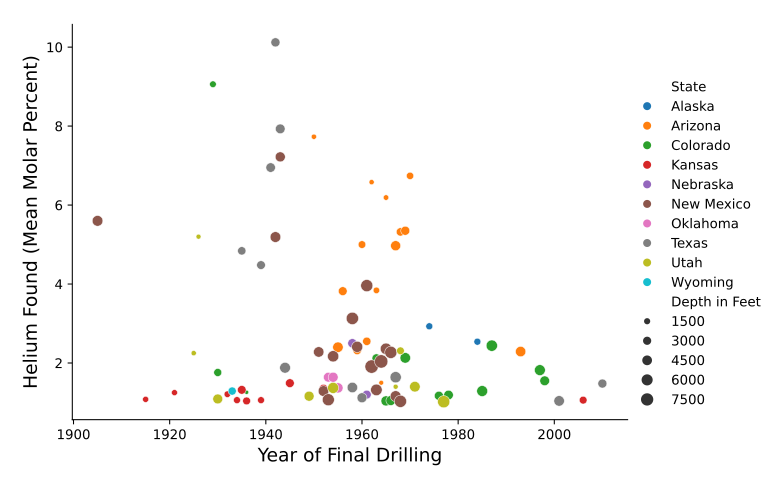
In our first scenario, an exploration company is deciding where to open its next helium mine. A data scientist creates a visual for company executives that explains past production in each state.
Figure 1. Helium Found by State
Source: USGS
This scatter plot uses U.S. Geological Survey data to show helium deposits discovered since 1900. It incorporates multiple dimensions to represent drill depth, yield, and location. Over time, we can see a decrease in shallow deposits and an increase in drill depth. Texas and Arizona were historically the most efficient harvesting locations, while New Mexico and Colorado provided consistent yields from deeper wells. The company may decide to target Texas, Arizona, and Colorado, which have the most helium production since 1990.
Scenario: Threat Analysis
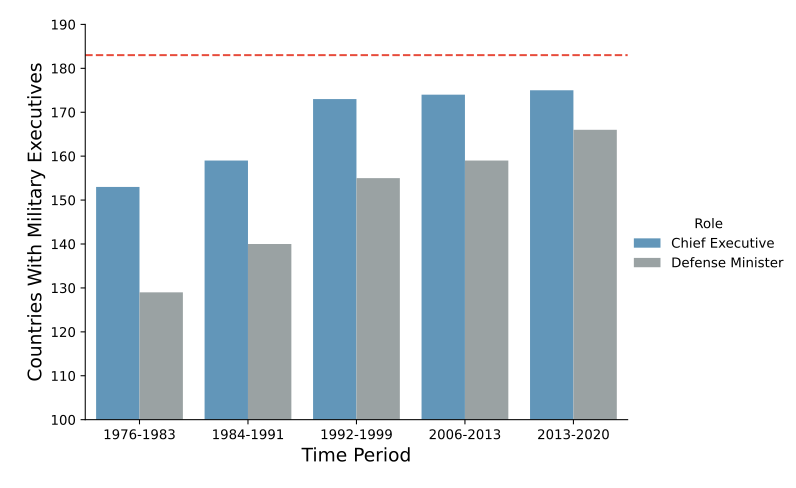
In our next scenario, a security agency is assessing international command and control nodes. A data scientist develops indicators of leadership receptivity to military actions and hostilities.
Figure 2. Military Chief Executives
Source: IDB
This bar plot shows the number of countries with military officers serving in chief executive roles since 1976. The red dotted line indicates the total number of countries in the survey (185). Between 1976 and 1983, roughly half of the countries had military leaders in top roles. By 2013, however, approximately 90% of nations had military officers serving as prime minister and defense minister. This upward trend indicates a growing military influence on international government leadership.
Read more to learn how I organize analytic projects to minimize cost and maximize efficiency.